Cost of Living in Ireland for International Students
Moving to Ireland as an international student is an exciting experience. The country is famous for its friendly people, green countryside, lively cities, and respected universities. Every year, thousands of students from around the world choose Ireland because of its quality education, welcoming culture, and strong job opportunities. However, before starting student life there, it is important to understand the real cost of living.
Ireland can be expensive compared to many other countries, especially for students coming from Asia, Africa, or South America. Cities like Dublin are known for high rent and daily expenses, while smaller cities such as Galway, Cork, and Limerick are usually more affordable. Still, with proper budgeting and smart spending habits, international students can enjoy a comfortable and balanced lifestyle.
This article explains the average cost of living in Ireland for international students using simple and natural English that people in Ireland commonly use in daily conversations.
Accommodation Costs in Ireland
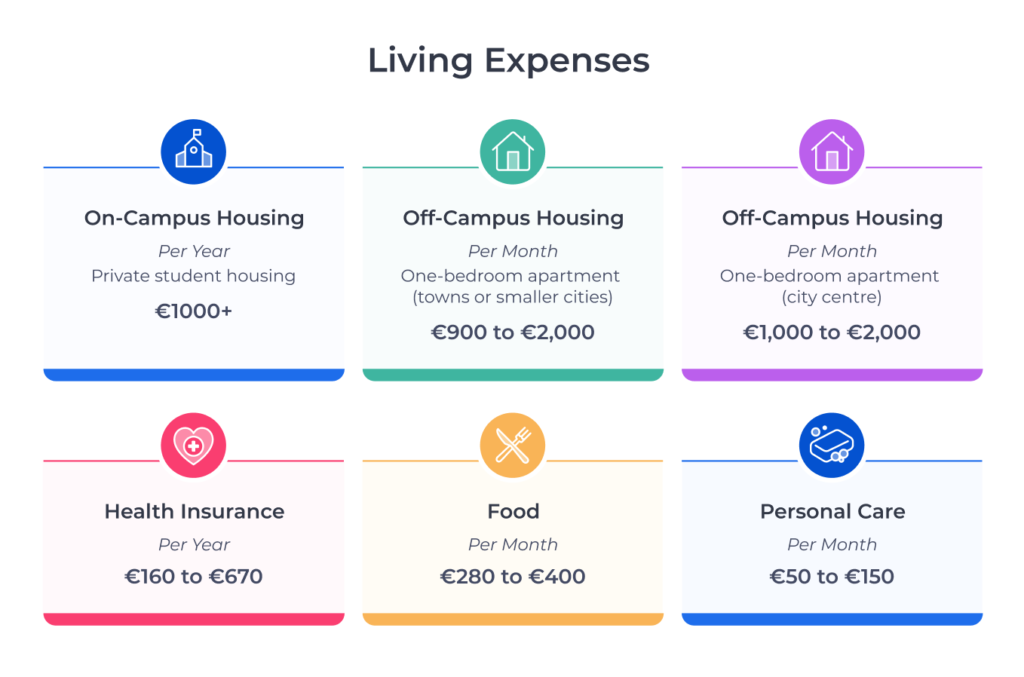
Accommodation is usually the biggest expense for students in Ireland. Rent prices depend on the city, the type of housing, and how close the place is to the university or city centre.
In Dublin, student accommodation is very expensive. A single room in a shared apartment may cost between €700 and €1,200 per month. Private student residences can cost even more, especially near famous universities like Trinity College Dublin or University College Dublin.
Outside Dublin, rent is usually cheaper. In Cork, Galway, or Limerick, students may find shared accommodation between €450 and €800 per month. Some students choose homestay options where they live with an Irish family. This can include meals and bills, making it easier to manage costs.
Many Irish students and international students share houses or apartments to save money. It is common to hear people say they are “house sharing” or “splitting the rent.” Sharing accommodation also helps students make friends and improve their English.
Students should start searching for accommodation early because housing demand in Ireland is very high. Websites, university notice boards, and social media groups are commonly used to find rooms.
Food and Grocery Expenses
Food costs in Ireland depend on personal lifestyle and eating habits. Students who cook at home usually spend far less than those who eat out regularly.
On average, international students spend around €200 to €350 per month on groceries. Popular supermarkets in Ireland include Tesco, Lidl, Aldi, and SuperValu. Lidl and Aldi are especially popular among students because of their cheaper prices.
A typical grocery basket for one week may include:
- Bread
- Milk
- Eggs
- Chicken
- Rice or pasta
- Vegetables
- Fruit
- Tea or coffee
Irish people often enjoy simple home-cooked meals such as stew, roast chicken, sandwiches, and soup. Tea is also a big part of Irish culture. Many students quickly get used to having “a cup of tea” during study breaks or while chatting with friends.
Eating out in Ireland can be expensive. A meal in an ordinary restaurant may cost between €15 and €25. Fast food meals usually cost around €10 to €14. Because of this, many students cook at home during the week and only eat out occasionally.
Transportation Costs
Public transport in Ireland is generally reliable, especially in larger cities. Students can save money by applying for a student travel card.
In Dublin, buses, trams, and trains are commonly used. The Dublin Bus and the Luas are important parts of daily life in the city. Students often use a Leap Card, which gives discounted fares.
Monthly transport costs usually range between €80 and €120 depending on travel frequency. Some students cycle to university because cycling is cheaper and healthy. Ireland has become more bike-friendly in recent years, especially in cities.
Outside Dublin, many students rely on buses. Smaller towns may have limited public transport, so students often walk more frequently.
Taxis are available but expensive. Irish students usually use taxis late at night or during bad weather rather than every day.
Utility Bills and Internet
If utilities are not included in rent, students may need to pay extra for electricity, heating, water, and internet.
Ireland’s weather can be cold and wet for much of the year, especially during winter. Heating bills can become expensive between November and February. Shared households usually split utility bills among all housemates.
Average monthly utility costs per student may include:
- Electricity and heating: €40–€80
- Internet: €15–€30
- Mobile phone plan: €20–€30
Irish people often try to save energy because electricity prices can be high. It is normal for housemates to remind each other to turn off lights or reduce heating usage.
Healthcare and Insurance
International students in Ireland usually need health insurance. Some universities include insurance as part of tuition fees, while others require students to buy private insurance separately.
Basic health insurance for students may cost around €150 to €300 per year. Students from countries in the European Union may use the European Health Insurance Card.
Visiting a doctor in Ireland can be expensive without insurance. A regular appointment with a GP (General Practitioner) may cost around €50 to €70.
Pharmacies are easy to find in Irish cities and towns. Irish pharmacists are generally helpful and willing to give advice for minor illnesses.
Entertainment and Social Life
Student life in Ireland is not only about studying. Irish culture is known for being social, friendly, and community-oriented. Students often spend time in cafés, pubs, cinemas, parks, and student clubs.
Cinema tickets usually cost around €10 to €15. A coffee in a café may cost €3 to €5, while a pint in a pub can cost €6 or more in Dublin.
Many universities have active student unions that organise events, sports activities, and cultural programmes. Joining these activities is a good way to meet people without spending too much money.
Irish people enjoy casual conversations and social gatherings. It is common to hear phrases like “grand,” “cheers,” or “what’s the craic?” in everyday speech. “Craic” means fun, entertainment, or enjoyable conversation.
Free activities are also available. Students can enjoy parks, museums, beaches, hiking trails, and music festivals across Ireland.
Study Materials and Academic Costs
Students should also budget for books, stationery, printing, and other academic needs.
Some university textbooks can be expensive, costing €50 to €100 each. However, many students buy second-hand books or borrow materials from university libraries.
Laptop computers are essential for most courses. Universities in Ireland usually provide good internet access, computer labs, and study spaces.
Printing costs may seem small at first, but they can add up over time. Many students try to submit assignments digitally whenever possible.
Part-Time Jobs for International Students
One advantage of studying in Ireland is that international students are usually allowed to work part-time during their studies.
Students can normally work up to 20 hours per week during the academic term and up to 40 hours during holidays. Common student jobs include:
- Café worker
- Waiter or waitress
- Retail assistant
- Hotel staff
- Delivery rider
- Cleaner
- Warehouse worker
Minimum wage in Ireland is relatively high compared to many countries. Students can earn enough to help cover living expenses, though it may not fully pay for tuition fees.
Having a part-time job also helps students improve communication skills and gain work experience. Irish employers often value friendliness, punctuality, and teamwork.
Comparing Dublin with Other Irish Cities
Dublin is the most expensive city in Ireland. Rent, restaurants, and transport costs are noticeably higher there. However, Dublin also offers more job opportunities, nightlife, and international communities.
Cities like Cork and Galway provide a more relaxed lifestyle. They are smaller, easier to navigate, and slightly cheaper for students. Limerick and Waterford are also popular among international students looking for affordable living.
Students who prefer peaceful environments may enjoy smaller towns, while those who love busy city life may prefer Dublin despite the higher costs.
Tips for Saving Money in Ireland
Living in Ireland as a student becomes much easier with smart budgeting. Here are some practical ways students save money:
1. Share Accommodation
Sharing rent and bills with other students reduces monthly expenses significantly.
2. Cook at Home
Preparing meals at home saves far more money than eating out regularly.
3. Use Student Discounts
Many shops, cinemas, transport services, and restaurants offer student discounts.
4. Buy Second-Hand Items
Students often buy used furniture, bicycles, and textbooks online.
5. Plan Monthly Spending
Creating a budget helps students avoid overspending.
6. Walk or Cycle
Walking and cycling reduce transport expenses and are common in Irish cities.
7. Use Free University Facilities
Libraries, gyms, study rooms, and student events are often included in university fees.
Cultural Adjustment and Lifestyle
Living in Ireland may feel different at first for international students. The weather can be colder and rainier than expected. Irish humour, accents, and slang may also take time to understand.
However, most students quickly adapt because Irish people are generally welcoming and approachable. Locals often enjoy helping newcomers feel comfortable.
Irish universities are multicultural environments, so international students rarely feel alone. Many campuses have international societies where students celebrate festivals, share food, and support one another.
The pace of life in Ireland is usually relaxed compared to larger global cities. People value work-life balance and social connection. Students often enjoy spending weekends exploring nature, visiting coastal towns, or listening to live music.
Is Ireland Expensive for International Students?
The simple answer is yes — Ireland can be expensive, especially in Dublin. Accommodation is the biggest challenge for many students. However, compared to countries like the United States or the United Kingdom, Ireland still offers strong value in terms of education quality, safety, and career opportunities.
Students who manage their finances carefully can live comfortably and enjoy everything the country has to offer. Many international students say the friendships, education, and cultural experiences make the cost worthwhile.
Ireland offers more than just university degrees. It gives students the chance to experience a warm culture, improve their English, build international networks, and enjoy life in one of Europe’s most beautiful countries.
For international students who are prepared financially and willing to adapt, studying in Ireland can become one of the best experiences of their lives.