How Artificial Intelligence Is Changing Everyday Life
Artificial Intelligence, commonly known as AI, is no longer a futuristic concept seen only in science fiction movies. Today, AI has become a major part of modern life and continues to transform the way people live, work, communicate, and solve problems. From smartphones and online shopping to healthcare and transportation, AI is influencing almost every aspect of daily activities. As technology continues to evolve, AI is becoming smarter, faster, and more accessible for individuals and businesses around the world.
AI refers to computer systems that can perform tasks normally requiring human intelligence. These tasks include learning, reasoning, problem-solving, understanding language, recognizing images, and making decisions. Thanks to advanced algorithms, machine learning, and large amounts of data, AI systems can improve their performance over time without direct human programming.
The impact of AI on everyday life is significant. Many people use AI tools every day without even realizing it. Whether asking a virtual assistant for weather updates, receiving movie recommendations, or using navigation apps, AI is quietly working behind the scenes. This article explores how artificial intelligence is changing everyday life and shaping the future of society.
AI in Smartphones and Personal Devices
One of the most common places where AI is used is in smartphones. Modern smartphones rely heavily on AI to improve user experience. Features like facial recognition, voice assistants, predictive text, and camera enhancements are all powered by AI technology.
Virtual assistants such as Siri, Google Assistant, and Alexa help users perform tasks using voice commands. People can ask questions, set reminders, control smart home devices, or search for information instantly. AI allows these assistants to understand human language more naturally and provide accurate responses.
Smartphone cameras also use AI to improve photo quality. AI can detect scenes, adjust lighting, recognize faces, and automatically optimize settings to capture better images. Some devices even use AI to remove unwanted objects from photos or create realistic visual effects.
Predictive text and autocorrect systems are other examples of AI in everyday communication. These systems learn typing habits and suggest words or phrases, making texting faster and more convenient.
AI in Healthcare
Artificial intelligence is revolutionizing healthcare by improving diagnosis, treatment, and patient care. Hospitals and medical professionals use AI systems to analyze medical data and assist in detecting diseases more accurately.
AI-powered tools can help doctors identify illnesses such as cancer, heart disease, and diabetes at earlier stages. Machine learning algorithms can analyze medical scans, blood tests, and patient histories faster than traditional methods. Early detection increases the chances of successful treatment and saves lives.
AI is also helping in drug development and medical research. Researchers use AI to analyze large amounts of scientific data and discover new treatments more efficiently. This became especially important during global health crises when scientists needed faster ways to develop vaccines and medicines.
Wearable devices like smartwatches use AI to monitor health conditions in real time. These devices can track heart rate, sleep quality, physical activity, and stress levels. Some systems can even alert users about potential health risks before symptoms become serious.
Telemedicine services powered by AI are making healthcare more accessible. Patients can consult doctors online, use AI chatbots for medical advice, and receive personalized health recommendations from home.
AI in Transportation
Transportation is another area where AI is creating major changes. Navigation apps such as Google Maps and Waze use AI to analyze traffic conditions, suggest faster routes, and estimate travel times. These systems process real-time data from millions of users to improve accuracy.
Self-driving cars are one of the most advanced examples of AI in transportation. Companies around the world are developing autonomous vehicles that can drive safely with minimal human intervention. AI systems in these vehicles use cameras, sensors, and machine learning to recognize roads, traffic signs, pedestrians, and obstacles.
Public transportation systems are also becoming smarter with AI technology. AI helps manage traffic flow, optimize bus schedules, and improve railway safety. Some airports use AI-powered systems for facial recognition, security checks, and passenger assistance.
Ride-sharing services use AI to match drivers with passengers, calculate prices, and predict demand. This improves efficiency and reduces waiting times for customers.
AI in Education
Artificial intelligence is transforming education by making learning more personalized and accessible. AI-powered educational platforms can adapt lessons based on individual student performance and learning styles.
Online learning systems use AI to recommend courses, provide instant feedback, and identify areas where students need improvement. This personalized approach helps learners study more effectively and at their own pace.
AI tutors and chatbots can answer questions and assist students outside classroom hours. Language learning apps also use AI to improve pronunciation, grammar, and vocabulary through interactive exercises.
Teachers benefit from AI as well. Automated grading systems reduce administrative workload, allowing educators to focus more on teaching and student support. AI can also help identify students who may need additional assistance.
Virtual reality and AI technologies together are creating immersive educational experiences. Students can explore historical sites, conduct virtual science experiments, and participate in realistic simulations from anywhere in the world.
AI in Shopping and E-Commerce
Online shopping has become more convenient thanks to artificial intelligence. E-commerce platforms use AI to analyze customer behavior, recommend products, and improve user experience.
When customers browse online stores, AI algorithms study their preferences, search history, and purchase patterns. Based on this data, the system suggests products that users are more likely to buy. This personalized shopping experience increases customer satisfaction and sales.
AI chatbots provide instant customer support by answering questions, tracking orders, and resolving issues. These virtual assistants are available 24 hours a day and can handle multiple customers simultaneously.
Retailers also use AI for inventory management and demand forecasting. AI systems can predict which products will be popular and help businesses avoid shortages or overstock situations.
Cashierless stores are another innovation powered by AI. In these stores, customers can enter, pick up products, and leave without waiting in line. AI systems automatically detect purchased items and charge customers digitally.
AI in Entertainment
Entertainment platforms rely heavily on artificial intelligence to keep users engaged. Streaming services like Netflix, YouTube, and Spotify use AI algorithms to recommend movies, videos, and music based on user preferences.
These recommendation systems analyze viewing habits, listening history, and user interactions to provide personalized content suggestions. This makes entertainment more enjoyable and helps users discover new content.
AI is also changing the gaming industry. Video games use AI to create realistic characters, intelligent opponents, and adaptive gameplay experiences. AI-powered graphics and animations make games more immersive and visually impressive.
Content creators use AI tools for video editing, image generation, music production, and scriptwriting. AI can speed up creative processes and provide new artistic possibilities.
Social media platforms use AI to organize feeds, detect harmful content, and recommend posts or advertisements that match user interests. While this improves user experience, it also raises discussions about privacy and data usage.
AI in Smart Homes
Smart home technology is becoming increasingly popular, and AI plays a central role in these systems. Smart devices can automate household tasks, improve energy efficiency, and enhance security.
AI-powered smart assistants can control lights, thermostats, televisions, and appliances using voice commands. Users can create automated routines such as turning off lights at bedtime or adjusting room temperature automatically.
Smart security systems use AI for facial recognition, motion detection, and real-time monitoring. Homeowners receive alerts if unusual activity is detected, improving safety and peace of mind.
AI also helps reduce energy consumption. Smart thermostats learn household habits and optimize heating or cooling systems to save electricity and lower utility bills.
Robot vacuum cleaners and smart kitchen appliances are making household chores easier. These devices can navigate rooms, clean floors, and even suggest recipes based on available ingredients.
AI in Banking and Finance
Banks and financial institutions use AI to improve customer service, security, and decision-making. Mobile banking apps often include AI chatbots that help customers check balances, transfer money, and answer financial questions.
Fraud detection systems powered by AI can analyze transaction patterns and identify suspicious activities quickly. This helps protect customers from financial crimes and cyber threats.
AI also assists in investment management. Robo-advisors use algorithms to provide personalized investment recommendations based on financial goals and risk tolerance.
Credit scoring systems use AI to evaluate loan applications more efficiently. By analyzing financial behavior and transaction history, AI can help banks make faster and more accurate lending decisions.
Digital payment systems and contactless transactions have also become more secure and convenient through AI technology.
Challenges and Concerns of AI
Despite its many benefits, AI also presents challenges and concerns. One major issue is privacy. AI systems collect and analyze large amounts of personal data, raising questions about how information is stored and used.
Job displacement is another concern. Automation powered by AI may replace certain jobs, especially repetitive tasks in industries such as manufacturing, customer service, and transportation. However, AI is also creating new career opportunities in technology, data analysis, and digital innovation.
Bias in AI systems is another important issue. If AI is trained using biased data, it can produce unfair or inaccurate results. Developers and governments must work together to ensure ethical and responsible AI use.
Cybersecurity threats are also increasing as AI technology becomes more advanced. Criminals may use AI for scams, hacking, or spreading misinformation. Strong regulations and security measures are necessary to reduce these risks.
The Future of AI in Everyday Life
The future of artificial intelligence looks promising. AI technology will likely become even more integrated into daily life in the coming years. Experts predict that AI will continue improving healthcare, transportation, communication, education, and environmental sustainability.
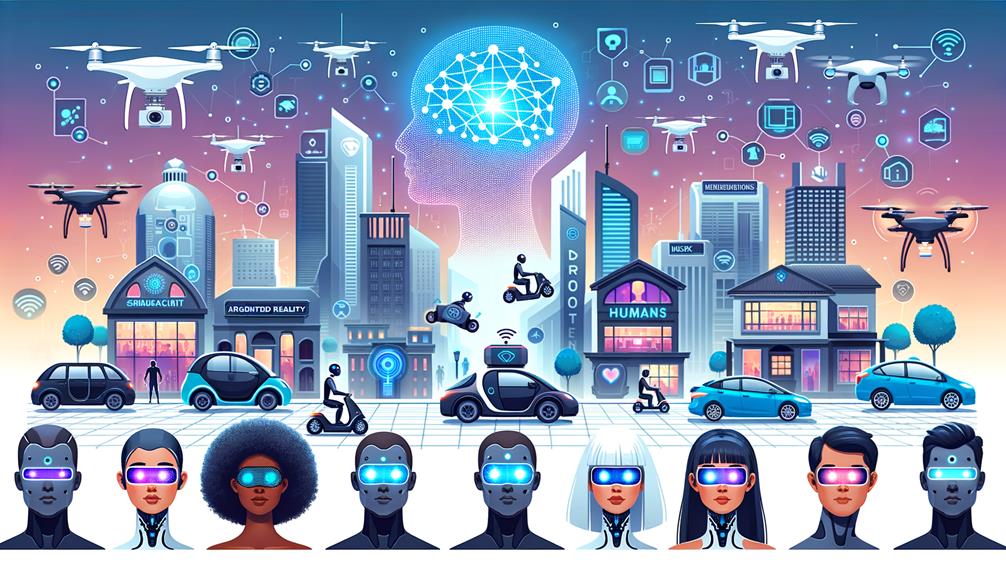
Smart cities powered by AI may improve urban living through intelligent traffic systems, efficient waste management, and better public services. AI could also help address global challenges such as climate change, food production, and disaster management.
As AI continues to evolve, society must balance innovation with ethical responsibility. Governments, businesses, and individuals need to work together to ensure that AI benefits humanity while protecting privacy, security, and fairness.
Conclusion
Artificial intelligence is transforming everyday life in remarkable ways. From smartphones and healthcare to transportation and entertainment, AI is making daily activities faster, smarter, and more convenient. It helps businesses improve efficiency, supports medical advancements, enhances learning experiences, and creates personalized digital services.
Although AI brings challenges related to privacy, employment, and ethics, its potential benefits are enormous. As technology advances, AI will continue shaping the future and influencing how people live and interact with the world.
Understanding artificial intelligence is becoming increasingly important because AI is no longer just a technology of the future—it is already a part of everyday life today.